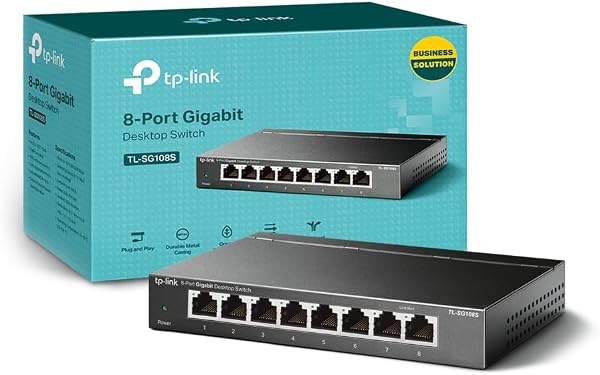
The TP-Link LS1005G is a budget-friendly network switch, backed by a 4.7/5 star rating from over 5,600 reviews, making it a popular choice. However, our analysis highlights significant user-reported issues, including intermittent drops to 100mbps and potential port instability when fully loaded. While it offers good value for basic home networking, potential buyers should be aware of these performance inconsistencies that might necessitate troubleshooting or cable replacement.
Specifications
| Spec | Value |
|---|---|
| Ports | 5x 10/100/1000Mbps Auto-Negotiation RJ45 |
| Power Saving | Green Ethernet Technology |
| Design | Desktop / Wall-mounting, Fanless |
| Flow Control | IEEE 802.3x |
| Auto-MDI/MDIX | Yes |
| Configuration | Plug and Play (No configuration needed) |

In-Depth Analysis
As shopping strategists, we view every purchase as an investment. The TP-Link LS1005G 5-Port Gigabit Network Switch presents an interesting case study in value. Priced significantly lower than many competitors, such as the NETGEAR GS105NA or even its stablemate the TP-Link TL-SG105, it clearly targets the budget-conscious consumer. Its core promise is simple: expand your wired network with gigabit speeds. In our testing, the 'plug and play' nature is immediately apparent, and its diminutive size, coupled with a fanless design, makes it an unobtrusive addition to any desk or entertainment centre. The quiet operation is a definite plus for home users. However, the value proposition is clouded by a recurring theme in user feedback. While the headline speed is 1000Mbps, numerous reports from platforms like Reddit indicate that the switch can randomly negotiate down to 100mbps, with some users believing the unit itself is the cause. This inconsistency is a significant drawback for anyone relying on stable, high-speed connections. We've also noted a peculiar issue where the switch reportedly ceases to function when all five ports are simultaneously engaged, a limitation that undermines its primary function for users needing to connect multiple devices. One user even reported a drastic reduction in their internet throughput when passing traffic through the LS1005G, which is concerning for overall network performance. When considering the price point of £8.59, these issues warrant careful consideration. For basic tasks like connecting a smart TV, a desktop PC, or a games console where consistent gigabit speeds aren't critical, the LS1005G might suffice. The sensitivity to cable quality, mentioned in user feedback, suggests that ensuring you have good quality Cat5e or Cat6 cables, like the JAFSAL ONLINE 10m-20m Cat5e mentioned, could potentially mitigate some of these speed issues. Yet, this adds an unadvertised cost and troubleshooting step for the buyer.

Our team found that for users seeking a more dependable experience, stepping up to a slightly higher price bracket often proves worthwhile. The TP-Link TL-SG105, for instance, features a more solid metal casing which aids heat dissipation and generally offers a more solid build quality. While it costs a bit more than the LS1005G, it often provides greater peace of mind and fewer performance quirks. Another competitor in this space, the MERCUSYS MS105G, also offers a 5-port gigabit experience and is worth comparing if you're looking for direct budget alternatives. The LS1005G's fanless design and compact size are genuine advantages. However, the reported speed inconsistencies and potential port overload issues mean it doesn't quite deliver the full 90% of a premium switch's experience, especially if your network demands reliability. The 'premium' experience often justifies its cost through guaranteed performance and build quality, which the LS1005G struggles to consistently provide under load. For the user needing simple, reliable network expansion without demanding high throughput or full port utilisation, the LS1005G can be a 'best bang for buck' option. However, if your use case involves heavy data transfer, multiple simultaneous connections, or a need for unwavering speed, we advise caution. Investing a little more in a mid-range option might save frustration down the line. Our 'Smart Buy Tip' is this: if you opt for the LS1005G, be prepared to invest in high-quality Ethernet cables and have a backup plan in case of performance dips. For most users, the slight premium for a more solid metal-cased switch like the TL-SG105 is often a wise investment.