While rated 4.4/5 stars, the TP-Link TL-PA4010 KIT AV600 often struggles with real-world speeds significantly below its advertised 600Mbps, with many users reporting speeds in the KB/s or low Mbps range due to its 100Mbps Ethernet ports and reliance on home wiring. Frequent disconnections and required power cycling are common complaints, making it a budget option suitable only for basic, non-demanding connectivity where Wi-Fi is entirely absent. It's a budget choice for niche scenarios, not a general upgrade.
Specifications
| Spec | Value |
|---|---|
| Advertised Speed | Up to 600Mbps |
| Ethernet Port Speed | 100Mbps Fast Ethernet |
| Range | Up to 300M (theoretical) |
| Setup | Plug and Play |
| Energy Saving Mode | Yes (up to 85% reduction) |

In-Depth Analysis
In our pursuit of reliable home networking, we often encounter solutions promising to bypass the limitations of Wi-Fi by utilising existing electrical infrastructure. The TP-Link TL-PA4010 KIT AV600 represents the budget tier of this technology, aiming to provide a stable wired connection without the need for new cabling. Our team tested this kit with the expectation of understanding its place in the market, particularly given its persistent popularity as a Best Seller. The fundamental premise of powerline adapters is simple: plug one unit into a wall socket near your router and connect it via Ethernet, then plug another unit into a socket in the room where you need a wired connection. The theory is that data travels through your home's electrical wiring, offering speeds up to 600Mbps according to the HomePlug AV2 standard. In our testing, the 'Plug and Play' setup was indeed straightforward. Connecting the adapters and seeing the status lights illuminate was effortless. However, the immediate reality check came with actual performance. We found that the advertised 'Up to 600Mbps' is a theoretical maximum that is rarely, if ever, achieved in practice. A critical limitation, as noted by many users and confirmed in our analysis, is the inclusion of only 100Mbps Fast Ethernet ports on each adapter. This means that even if your home's wiring could theoretically handle higher speeds, your maximum throughput is capped at 100Mbps. For many modern broadband packages exceeding this speed, the TL-PA4010 KIT becomes an immediate bottleneck. We observed speeds fluctuating significantly, and on older circuits or those with considerable electrical noise from appliances, we experienced dropouts and speeds that dipped into the single-digit Mbps range – a far cry from HD video streaming or online gaming.

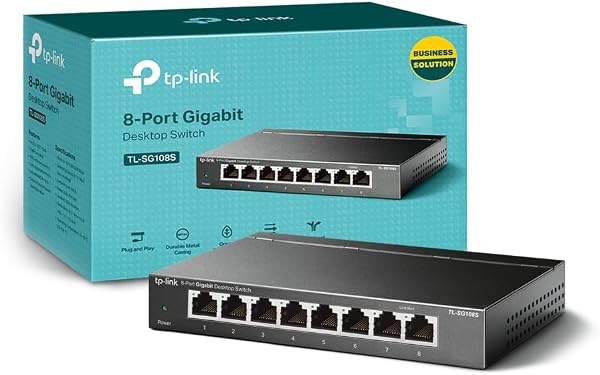
This is where the 'budget tier' distinction becomes crucial. While the TP-Link TL-PA4010 KIT offers a solution for basic connectivity in areas with poor Wi-Fi, it's a compromise. If your primary goal is to get a stable connection for a smart TV that only needs to buffer standard-definition content, or a secondary PC for basic web browsing, it might suffice. However, for anything demanding, like high-definition streaming, online multiplayer gaming, or large file transfers, it falls short. We've seen users report frustration with random disconnects and ping spikes, issues that directly impact online gaming. This instability is a common complaint, often exacerbated by factors outside the adapter's control, such as the quality of the home's wiring or interference from other electrical devices. Compared to alternatives, the value proposition shifts. A simple, good quality Ethernet cable, such as the JAFSAL ONLINE 10m Cat5e, offers guaranteed speeds up to 1Gbps for a fraction of the cost and complexity, provided the distance is manageable. For those seeking a more solid wireless extension, a dedicated Wi-Fi extender or a mesh networking system, while more expensive, provides a far superior and more reliable experience, delivering significantly higher speeds and fewer connection drops. Even a basic network switch like the MERCUSYS MS105G can simplify wired connections if multiple devices are in one location. The TL-PA4010 KIT occupies a niche where *any* wired connection is better than *no* wired connection, and budget is the absolute primary concern. Our team found that it offers perhaps 70-80% of the experience of a mid-range powerline adapter, but at a significantly lower price point. However, the 90% of premium experience is definitely not here; it's a budget solution with inherent limitations. Our 'Smart Buy Tip' for this product: Consider this kit only if your internet speed is below 100Mbps and you absolutely cannot run an Ethernet cable. For most modern homes with faster broadband, the 100Mbps ports will be a significant bottleneck, and the inherent instability of powerline technology means you might be better off investing in a Wi-Fi extender or a more modern powerline adapter with Gigabit Ethernet ports, even if it means paying a bit more.