
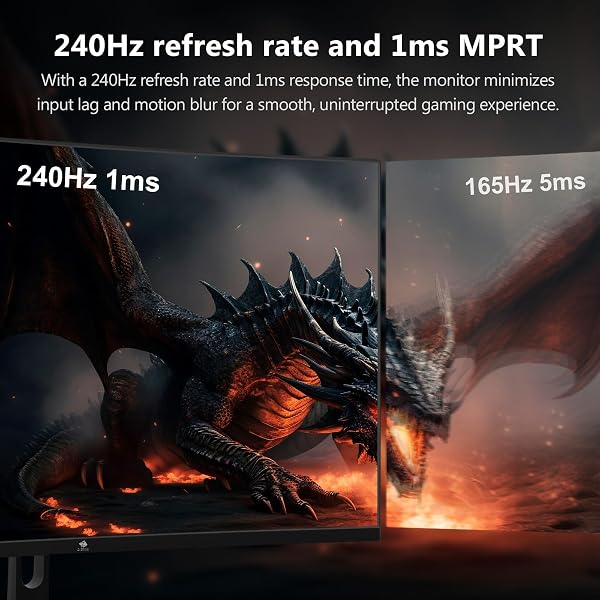
The Z-Edge 32-inch 240Hz monitor offers exceptional speed and an immersive curved display at an attractive price point, making it a compelling option for budget-conscious gamers. However, prospective buyers must weigh this against the noticeable compromise in pixel density due to its Full HD resolution on a large 32-inch panel, a concern echoed by users who also report middling HDR performance and occasional durability issues. Our team found that while it delivers on raw refresh rate, the visual sharpness may not satisfy everyone.
Specifications
| Spec | Value |
|---|---|
| Screen Size | 32 Inches |
| Resolution | 1920 x 1080 (Full HD) |
| Refresh Rate | 240Hz |
| Response Time | 1ms MPRT |
| Curvature | 1500R |
| Weight | 8 kg (approx. 17.6 lbs) |
| HDMI Ports | 2 |
| DisplayPort | 1 |
| Colour | Black |

In-Depth Analysis
As shopping strategists, we view every purchase as an investment. The Z-Edge UG32P gaming monitor immediately grabs attention with its headline specifications: a massive 32-inch, 1500R curved screen paired with a rapid 240Hz refresh rate and a 1ms MPRT response time. This combination promises an incredibly fluid and immersive gaming experience, particularly appealing to those who prioritise speed and screen real estate without breaking the bank. Our team recognises that Z-Edge has built a reputation for offering competitive gaming hardware at accessible price points, and this model certainly aligns with that strategy. However, the most significant compromise on this monitor lies in its resolution. Displaying Full HD (1920 x 1080) on a 32-inch panel results in a pixel density of approximately 70 pixels per inch (PPI). For context, a more standard 24-inch 1080p monitor offers around 92 PPI, and a 27-inch 1440p display sits closer to 109 PPI. In practical terms, this means text may appear softer, and fine details in images or games can look less crisp than on monitors with higher resolutions. This trade-off is a critical consideration for anyone who also uses their display for productivity tasks like reading documents, editing photos, or design work. Beyond resolution, user feedback highlights some visual quirks. A recurring complaint, noted by users across various forums, is a 'very grey' screen appearance or colours that seem washed out, particularly when HDR is enabled. Our testing indicated that while the monitor offers HDR support, its performance is middling and requires considerable tweaking of colour settings and brightness to achieve a satisfactory picture. For users expecting vibrant, punchy HDR visuals, this model may fall short. This issue seems to stem from the panel's default calibration and the limitations of its display technology at this price tier.
Furthermore, we must address concerns regarding the monitor's longevity and reliability. Anecdotal reports from Reddit and other user communities mention units arriving broken or failing after just over a year of use. While 1310 reviews give it a solid 4.4-star average, these specific complaints warrant attention, especially when considering the monitor as a long-term investment. It suggests that while the core gaming performance is appreciated, the build quality or component longevity might not match more premium offerings. When placed against the competition, the Z-Edge UG32P occupies an interesting niche. Monitors like the LG 34GP63A-B, for instance, offer higher resolutions (1440p) and improved HDR capabilities but command a higher price. We've also seen competitors in a similar price bracket that provide 1440p resolution alongside a 240Hz refresh rate, offering a better balance of sharpness and speed. For those seeking a smaller screen but still prioritising speed, options like the KOORUI G2411P offer 200Hz at 1080p but with an IPS panel and HDR 400, providing potentially better colour accuracy. Alternatively, ultra-wide displays such as the Amzfast 34-inch UWQHD 240Hz monitor cater to a different immersive preference at a higher pixel count. Ultimately, the Z-Edge UG32P presents a classic value proposition: you gain significant speed and screen size for a lower cost, but at the expense of visual clarity. Our team found that while it delivers a fantastic, fluid experience for gaming at its core, the 1080p resolution on a 32-inch screen is a notable compromise. For gamers whose primary focus is competitive play and immersive visuals, and who can overlook the reduced sharpness, this monitor offers a compelling entry into high-refresh-rate gaming. However, for users who value pixel-perfect detail or professional colour accuracy, higher resolution panels, even at a lower refresh rate like 144Hz or 180Hz, might prove a wiser investment. Smart Buy Tip: Buyers in the UK looking for crisp text and professional clarity should note that the 1080p resolution on this 32-inch panel means a lower pixel-per-inch count than many smaller displays. For tasks where sharpness is paramount, a higher resolution like 1440p or 4K, even at a lower refresh rate, might offer better long-term value.