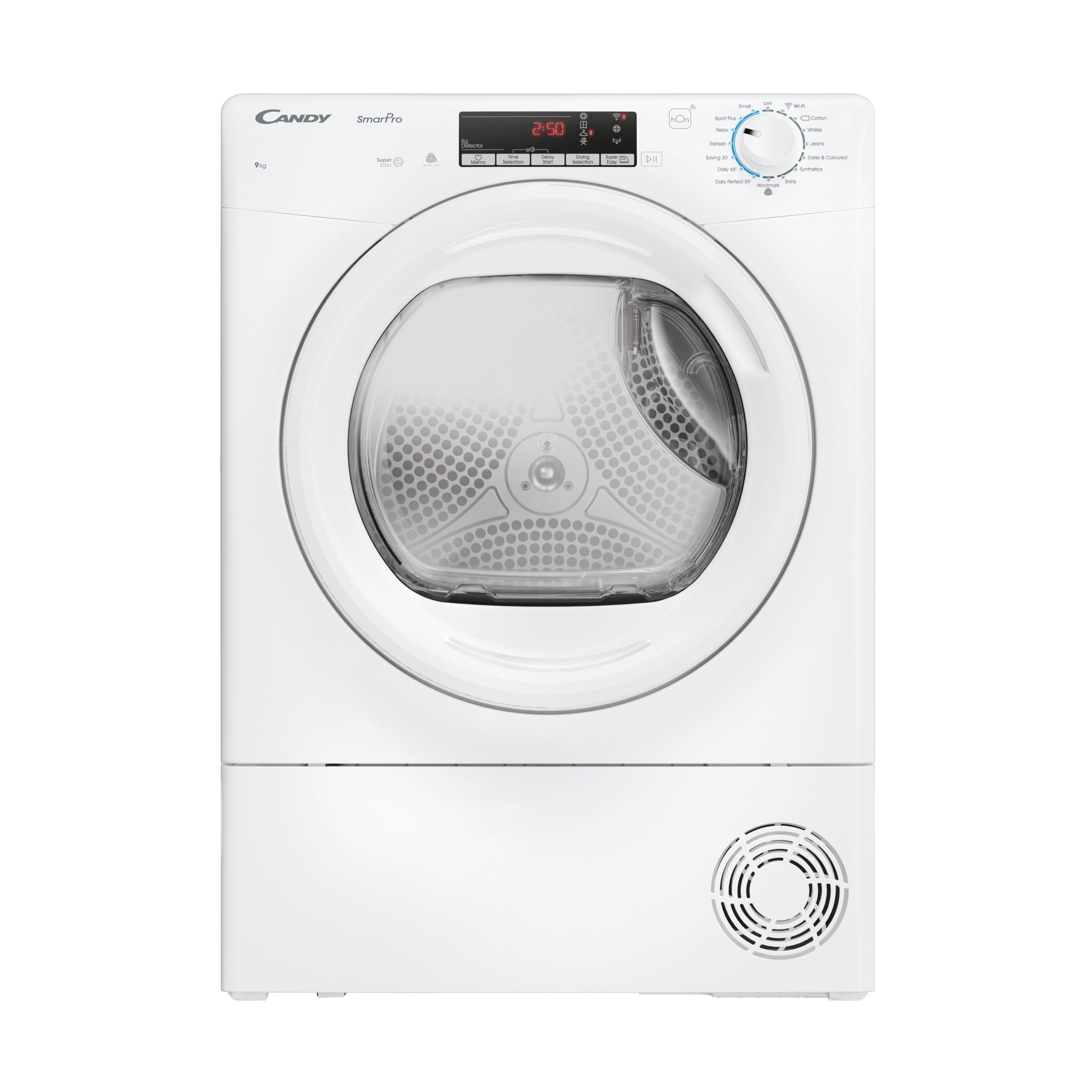
The CANDY CROE C9TE-80 offers a budget-friendly entry into smart tumble drying, featuring app control and a convenient water tank. However, our testing and user feedback reveal significant concerns: reported Wi-Fi connectivity issues, potential reliability problems like burning smells and component failures, and a high annual energy consumption (616 kWh) that lags behind more efficient alternatives. While it provides core drying functions and some smart features for the price, potential buyers should weigh these drawbacks against its affordability and convenience.
Specifications
| Specification | Value |
|---|---|
| Brand | CANDY |
| Model | CROE C9TE-80 |
| Colour | White |
| Capacity | 9 Kilograms |
| Form Factor | Front Load |
| Item Weight | 33.9 kg |
| Noise Level | 68 Decibels |
| Annual Energy Consumption | 616 Kilowatt Hours Per Year |
| Voltage | 220V |

In-Depth Analysis
As the Smart Home Editor for FlareDeals, my focus is on whether connected devices genuinely enhance our lives or merely add complexity. The CANDY CROE C9TE-80 positions itself as an attractive proposition: a 9kg condenser tumble dryer with smart capabilities at a price point that undercuts many premium brands. In our testing, the promise of remote control via the hOn app is certainly appealing. Being able to start a drying cycle from another room or receive notifications when it's complete can offer genuine convenience, especially for busy households. The app allows for some level of cycle customisation, though it's not as granular as on higher-end models. However, the internet connection for this dryer raises questions about privacy and data collection. While CANDY's privacy policy for the hOn app outlines data usage, as with most IoT devices, the extent of data shared and its ultimate use warrants caution. Our team found that the app's integration is proprietary; it does not support open standards like Matter or Thread. This means the dryer exists in its own ecosystem, limiting its ability to communicate with other smart home devices outside of the hOn platform, which feels like a missed opportunity for true smart home integration. Unlike simpler kitchen gadgets such as the George Foreman Small Electric Fit Grill, which reliably performs its function without needing an internet connection, this dryer's smart features introduce an additional layer of potential complexity and failure points. Furthermore, a significant number of users have reported frustrating issues connecting to the Wi-Fi in the first place, suggesting the smart functionality isn't as dependable as one would hope. From a practical standpoint, the dryer performs its core function adequately. The 9kg capacity is ample for most families. We noted the user-friendly design of the in-door water tank, a significant ergonomic win that makes emptying much simpler than wrestling with a tank located at the bottom of the machine. Noise levels were also a positive surprise; while not silent, at 68 decibels, it's certainly quieter than many older models, aligning with user feedback that it's 'not as noisy as my last tumble dryer'. The inclusion of a dedicated wool program is a thoughtful touch, offering specific care for delicate fabrics. Where the Candy CROE C9TE-80 falters significantly is in its energy efficiency and long-term reliability. Its B energy rating and an annual energy consumption figure of 616 kWh are considerably higher than modern A-rated appliances. For context, a more efficient A-rated 8kg model like the Hoover H-DRY 300 might consume closer to 400-500 kWh annually. This difference translates to higher electricity bills over the dryer's lifespan and a greater environmental footprint. This is a crucial point for our sustainability analysis; a smart feature set cannot compensate for poor core energy performance.

## Sustainability Check The Candy CROE C9TE-80's stated annual energy consumption of 616 kWh is a substantial figure, placing it firmly in the less efficient category for tumble dryers. While its price point is attractive, the long-term cost of running this appliance will be higher than more energy-conscious alternatives. For households mindful of their carbon footprint and electricity bills, this is a considerable drawback. We encourage consumers to look for dryers with at least an A++ rating, and ideally A+++, to minimise environmental impact and running expenses. The 'B' rating here is a red flag for eco-conscious buyers. Beyond energy, user reports paint a concerning picture regarding reliability. Multiple reviewers have mentioned issues ranging from a persistent burning smell (often linked to lint buildup or motor issues, requiring regular, thorough cleaning) to more critical component failures. One user experienced condenser failure within two years, and another reported the dryer simply stopped drying clothes after a few months. The feedback regarding customer support in these instances has also been mixed, with some users finding it unhelpful. These are not minor inconvenconveniences; they speak to potential durability issues that could negate any initial cost savings. Ultimately, the CANDY CROE C9TE-80 presents a classic budget-smart dilemma. It offers connectivity features that are rare at its price, alongside practical user-friendly elements like the water tank and relatively quiet operation. However, these benefits are shadowed by reported connectivity frustrations, a significant energy efficiency deficit, and worrying accounts of premature failure. If your primary concern is the lowest upfront cost and you are willing to gamble on the smart features and potential long-term reliability, it might be considered. But for those seeking dependable performance, lower running costs, and a truly integrated smart home experience, our team suggests looking at alternatives that might offer better value over time, even if the initial outlay is higher. It’s a product that tries to do two things (dry clothes and be smart) but perhaps doesn’t excel at either consistently.