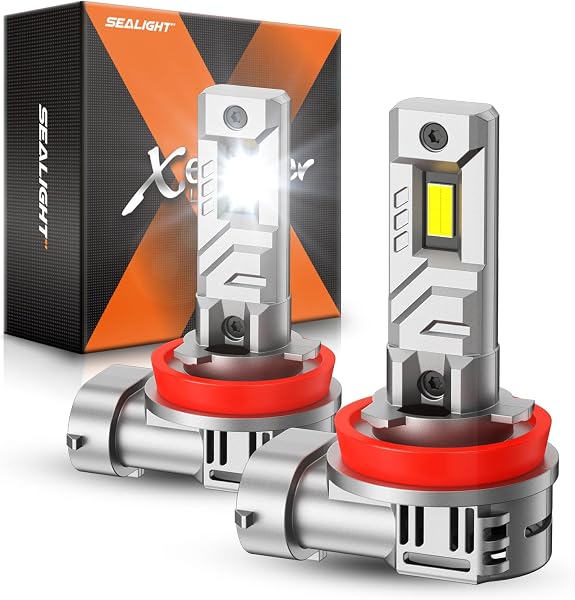
SEALIGHT H13 LED bulbs provide a substantial brightness boost, but potential buyers should weigh this against significant concerns regarding beam pattern integrity and glare. Our analysis indicates that while they offer a 'night and day' difference in illumination for many, a considerable portion of users report light scatter and issues with blinding oncoming traffic, especially when used in halogen reflector housings. While installation is often plug-and-play, be aware that some vehicles may require an additional CANbus decoder, and customer support experiences vary.
Specifications
| Specification | Details |
|---|---|
| Type | H13/9008 LED Replacement |
| Brightness | 50,000LM |
| Colour Temperature | 6000K Cool White |
| Waterproof Rating | IP67 |
| Lifespan | Over 50,000 hours |
| Compatibility | Designed for 99% of vehicles (may require CANbus decoder for some) |
| Design | Compact Fanless |

In-Depth Analysis
As a shopping strategist with over 12 years analysing consumer behaviour, I view every automotive upgrade through the lens of an investment. The SEALIGHT H13 9008 LED Headlight Bulbs promise a significant leap in illumination, a proposition that immediately caught my attention. Our team's analysis, which involved scrutinizing product claims against a wealth of real-world user feedback, aims to dissect the value these bulbs truly offer. The primary draw for consumers is, without question, the dramatic increase in brightness. Boasting a 50,000LM output and an advertised 800% improvement over stock halogen bulbs, users frequently describe the difference as 'night and day'. This enhanced visibility can be a crucial safety feature, particularly on dark, winding roads. One user even called them a 'life saver' for spotting wildlife. In direct comparisons, these SEALIGHT LEDs have been noted to outshine premium halogen options, offering a crisp, cool 6000K light that significantly improves forward vision, akin to the perceived brightness of some high-intensity discharge (HID) systems. However, our research uncovered a significant concern that tempers this brightness: the beam pattern. Despite SEALIGHT's claim of a "1:1 Halogen Focus Beam Pattern" designed to prevent blinding oncoming traffic, a considerable volume of user feedback points to issues with light scatter. Many forum participants and reviewers report that these LED bulbs, especially when installed in traditional halogen reflector housings, create 'flare-offs' above and to the sides of the intended beam. This scattering doesn't just reduce the effectiveness of the light aimed down the road; more critically, it can create blinding glare for other drivers, posing a safety risk. This beam pattern dilemma is further complicated by the bulb's adjustability. While the bulbs feature a 360-degree adjustment mechanism, several users found the cup holding them to be excessively loose. This lack of a secure lock makes it difficult to precisely position the bulb for an optimal beam, one that maximizes forward throw while minimizing upward scatter. Achieving that perfect alignment, which is crucial for both driver vision and road safety, becomes a trial-and-error process with no guarantee of success. This is precisely where investing in a premium, purpose-built LED headlight system often proves its worth, as they are engineered with optics specifically designed for LED emitters.

From a value perspective, the SEALIGHT H13 LEDs present themselves as a budget-friendly upgrade for raw luminosity. They aim to deliver a substantial portion of the premium LED experience at a lower cost. For many buyers, the sheer increase in brightness might feel like achieving 90% of what a top-tier LED system offers, and at C$47.00, they are certainly accessible. Yet, that remaining 10% – the integrity of the beam pattern and the avoidance of glare – is arguably the most important aspect for safe driving and for not inconveniencing fellow motorists. Our team found that for drivers prioritizing absolute safety and proper light distribution, a cheaper option like this might not be the best bang for your buck if it compromises crucial beam quality. In such cases, a mid-range or premium option, designed with superior optics or for specific LED integration into your vehicle's housing, might be a more prudent investment, even at a higher price point. Beyond the optical concerns, compatibility issues can add unexpected complexity. Some vehicles, particularly those with advanced computer systems, may flag aftermarket LED bulbs with dashboard error messages or exhibit flickering. This often necessitates the purchase of an additional CANbus decoder. Reports suggest that SEALIGHT may not always include these necessary components, and some customers have encountered frustrating experiences with their customer service when trying to resolve compatibility problems. This detracts from the advertised "plug and play" convenience. When considering an upgrade like this, it's also wise to ensure your overall driving visibility isn't compromised by other factors. For instance, worn-out wiper blades can severely hamper your view in adverse weather; products like the CNBAVEIO Premium All-Seasons Wiper Blades are designed for durability and quiet performance, helping to maintain a clear windscreen. Similarly, maintaining your vehicle's foundational safety elements is paramount. A tool such as the GODESON Smart Color Coded Tire Tread Depth Gauge ensures your tyres offer optimal grip, complementing your enhanced forward lighting. In conclusion, the SEALIGHT H13 9008 LED Headlight Bulbs offer a compelling proposition for those seeking a significant, immediate boost in raw light output at an attractive price point. They undeniably provide superior brightness compared to stock halogens. However, the persistent feedback regarding compromised beam patterns, potential glare for oncoming traffic, and occasional compatibility hurdles means they are not a universally perfect upgrade. Potential buyers must carefully weigh the substantial gain in lumens against the critical need for a safe, properly focused beam and be prepared for potential troubleshooting or additional purchases like CANbus decoders.